National Museum of Saudi Arabia
A journey from the formation of the peninsula through the ancient kingdoms, the rise of Islam and the unification of the kingdom.

Home›Culture›Timeline›Saudi Arabia: History and Culture
Saudi Arabia
Saudi Arabia history runs from rock art and the Nabataean tombs of Hegra to the mud-brick palaces of Diriyah, the birthplace of the Saudi state. Saudi culture, rooted in Bedouin hospitality and the faith of Islam, is opening to the world as never before.
At a glance
Eras of Saudi Arabia history
The Arabian Peninsula was once green, and rock art at Jubbah and Hima records hunters, camels and inscriptions over thousands of years. Mysterious stone structures called mustatils, among the oldest monuments known, dot the northwest. Ancient kingdoms such as Dadan and Lihyan grew rich on the incense route that carried frankincense and myrrh north to the Mediterranean.
The Nabataeans carved more than a hundred monumental tombs at Hegra (Mada'in Salih) near AlUla, the kingdom's first World Heritage Site. In the 7th century, the Prophet Muhammad received the revelation of Islam in Makkah, and Madinah became the first Islamic city. Since then, the Two Holy Mosques have drawn pilgrims from every corner of the globe. Learn more about the incense route and the great mosques.
In 1727 the First Saudi State was founded at Diriyah, whose At-Turaif district is now restored. King Abdulaziz Al Saud unified the kingdom, proclaimed in 1932, and oil was discovered at Dammam in 1938. Today Saudi Vision 2030 is transforming the country with giga-projects, culture and tourism. Read about the royal family of Saudi Arabia and Vision 2030. Two newer World Heritage Sites widen the story: the red dunes of 'Uruq Bani Ma'arid in the Empty Quarter (2023) and the caravan city of Al-Faw (2024).
Languages and five useful
Arabic is the official language, with Najdi, Hijazi and other regional dialects; English is widely used in business, hotels and signage.
| English | Local phrase | Say it like |
|---|---|---|
| Hello | As-salamu alaykum | ah-sah-LAH-moo ah-LAY-koom |
| Welcome | Hala wallah | HAH-la WAL-lah |
| Thank you | Shukran | SHOOK-ran |
| How are you? | Kaif halak? / halik? | kayf HAH-lak / HAH-lik |
| God willing | Insha'Allah | in-SHAH-al-lah |
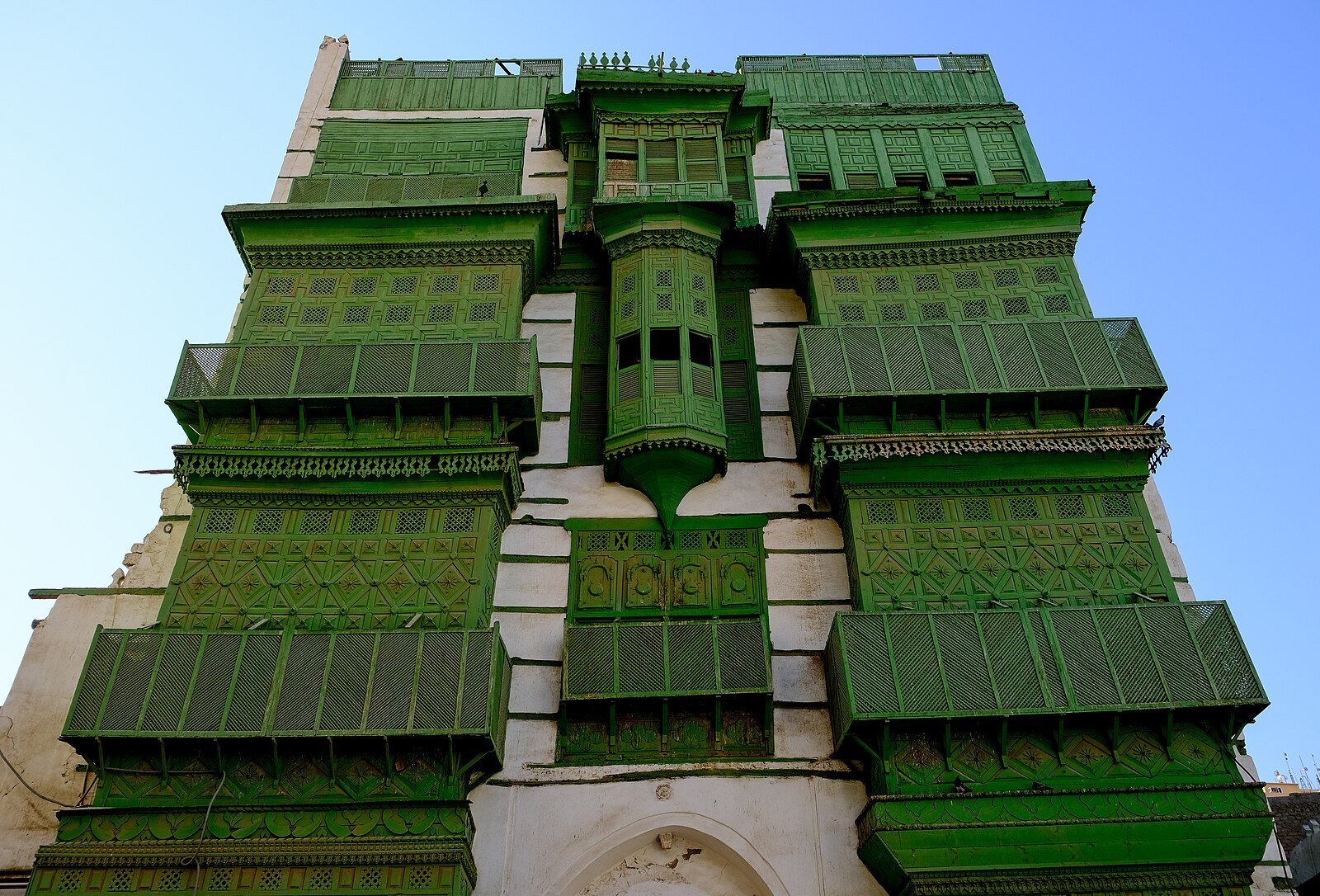
Architecture changes with the landscape: Najdi mud-brick with triangular openings in Riyadh and Diriyah; the coral-stone houses and carved wooden rawasheen balconies of Historic Jeddah (Al-Balad); and the stone tower homes of the south. Al-Qatt Al-Asiri, the bright geometric wall painting created by women in Asir, is recognized by UNESCO.
Contemporary art is flourishing, from the Diriyah Contemporary Art Biennale and the Islamic Arts Biennale in Jeddah to Desert X AlUla, where installations rise among the sandstone outcrops. Sadu weaving, calligraphy and the art of incense burning remain cherished. See Arabic calligraphy and Bedouin heritage.
Kabsa, fragrant rice with lamb or chicken and a blend of spices, is the national dish, served on large shared platters. Jareesh, cracked wheat cooked with yogurt, and marqooq, a Najdi stew with thin dough, are home favorites; in Jeddah, try mutabbaq, a stuffed pancake, and fresh Red Sea fish.
Dates are central to Saudi life, and Qassim's annual date festival is one of the largest in the world. Saudi coffee, lightly roasted and spiced with cardamom and sometimes saffron or cloves, is served in small cups with dates, a ritual honored by UNESCO. See our page on Arabic coffee and dates.
A journey from the formation of the peninsula through the ancient kingdoms, the rise of Islam and the unification of the kingdom.
More than a hundred Nabataean tombs carved into golden sandstone, the kingdom's first World Heritage Site.
Official site ↗The restored mud-brick seat of the First Saudi State, now a cultural district with museums and dining.
Coral-stone merchant houses with wooden balconies, centuries-old souks and the restored Nassif House. The Red Sea Museum opened here in December 2025 in the restored Bab Al-Bunt building.
A landmark cultural center with museum, library, theater and exhibitions.
Official site ↗Hospitality is a duty and a joy, expressed in the majlis, where guests are received with coffee and incense. Falconry, camel racing and the Ardah, the sword dance performed at national celebrations, are living heritage. Learn more about Arab hospitality and the majlis and luxury Umrah travel; Makkah may be entered only by Muslims.
Saudi Arabia is home to the Empty Quarter, the largest continuous sand desert on earth. The kingdom has more than a thousand islands in the Red Sea. AlUla's Maraya is the world's largest mirrored building. Plan your trip with our Saudi Arabia luxury travel guide, explore AlUla and Hegra stay in Diriyah and walk the old lanes of Jeddah's Al-Balad.
Ultra-Luxury Real Estate · Own Here
The places you discover as a guest are the places to own. Open to non-Saudis under the law in force since January 22, 2026, with designated zones in Riyadh and Jeddah; residents may own a home outside restricted areas.
Ultra-Luxury Tourism & Ultra-Luxury Real Estate
Checked October 2026. Prices and dates are approximate and can change. See our standard.