Camels
Called the ship of the desert, the camel gave milk, transport and wealth. Camel racing, now with robot jockeys, and camel beauty contests such as Abu Dhabi's Al Dhafra festival are hugely popular.

Home›Culture›Timeline›Bedouin Heritage
Culture
Bedouin culture is the deep root of Arabian identity: a way of life built on camels, black goat-hair tents, poetry and legendary hospitality. Today travelers can experience this desert heritage in comfort, from Wadi Rum to the dunes of Liwa and the Empty Quarter.
At a glance
For thousands of years, Bedouin tribes moved with their herds across the deserts of Arabia, the Levant and North Africa, following rain and grazing. Survival depended on deep knowledge of stars, wells and weather, and on a code of honor in which protecting a guest was a sacred duty. A traveler arriving at a tent could expect food, shelter and safety for three days before being asked his business.
The traditional home is the bayt al-shaar, the house of hair, woven from black goat hair that swells in rain and breathes in heat. Inside, a woven curtain divides the men's majlis, where guests are received, from the family quarters. Many Gulf families still pitch a winter tent in the desert today, a cherished link to their grandparents' world.
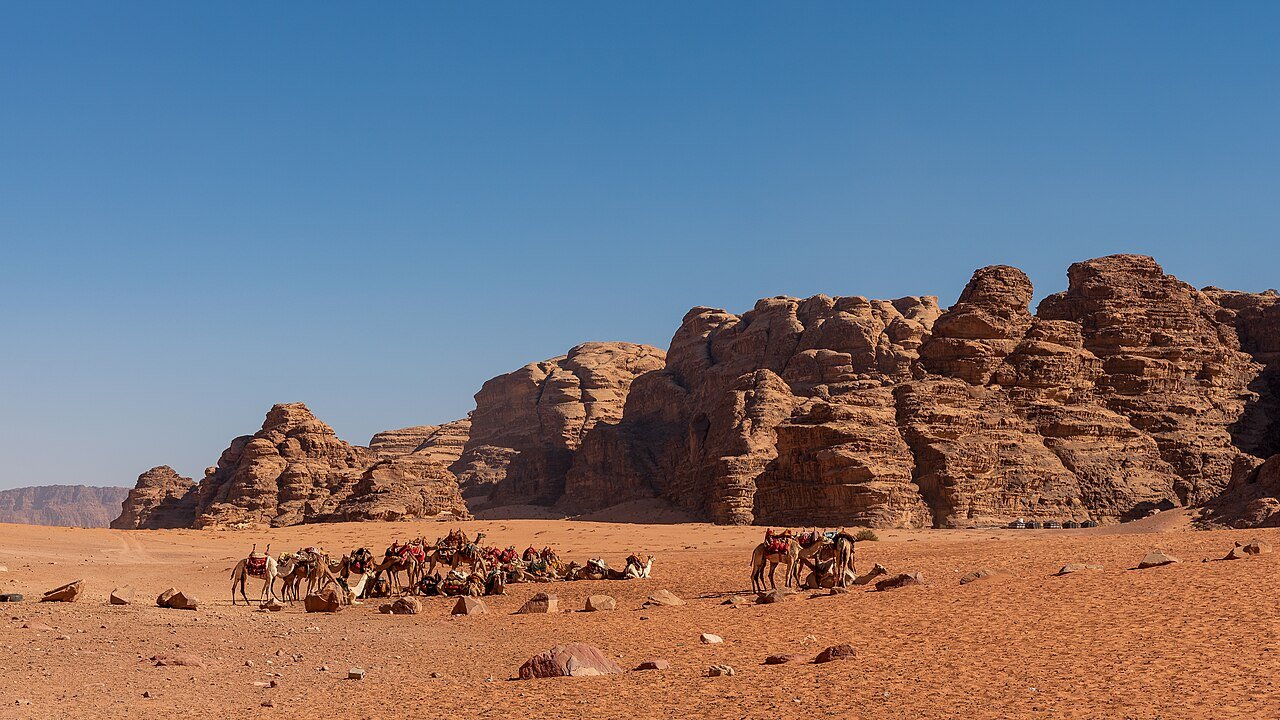
Called the ship of the desert, the camel gave milk, transport and wealth. Camel racing, now with robot jockeys, and camel beauty contests such as Abu Dhabi's Al Dhafra festival are hugely popular.
Inscribed by UNESCO as shared heritage of many nations, falconry was once a way to hunt for the pot and is now a prized sport. Abu Dhabi even has a dedicated falcon hospital that welcomes visitors.
Bold geometric textiles woven by Bedouin women on ground looms, recognized by UNESCO for the UAE, Saudi Arabia and Kuwait. Kuwait's Sadu House preserves the craft.
Oral poetry in everyday Arabic, still beloved across the Gulf; televised contests draw huge audiences, and several rulers are respected poets.
Performances of drums, chanting and bamboo canes that recall the battle line, staged at weddings and national days.
Coffee, dates and conversation, the heart of Bedouin life, live on in the majlis; see hospitality and the majlis.
Where to experience Bedouin
Red sand and sandstone towers, with Bedouin guides from the Zalabia and Zawaideh communities; stay in a luxury dome camp. See Wadi Rum.
Some of the world's tallest dunes, with a luxury resort set among them and the winter Liwa festival.
Desert canyons, Nabataean tombs and luxury tented resorts. See AlUla.
Golden dunes and Bedu families who welcome visitors for coffee; boutique desert camps add comfort.
The Saharan dunes of Erg Chebbi, with Amazigh nomad heritage and luxury camps. See Merzouga.
Choose operators that employ local guides and share income with the community. Dress modestly, ask before photographing people, and accept the coffee you are offered. Our luxury desert camps and lodges and desert sports pages list the finest options, and the living heritage page explains each UNESCO tradition.
Most Bedouin families today live in towns, but many keep camels, return to the desert in winter and proudly maintain their traditions.
Often a zarb or mandi feast, with lamb slow-cooked underground or in a sealed pot, served with rice, dates, coffee and music under the stars.
The finest camps offer private tents or domes with en-suite bathrooms, air conditioning and fine dining.
Ultra-Luxury Real Estate · Own Here
Across the Middle East, the finest resorts and the finest homes now sit side by side, and many international buyers own before they ever visit.
Ultra-Luxury Tourism & Ultra-Luxury Real Estate
Checked October 2026. Prices and dates are approximate and can change. See our standard.