Oil terminals and VLCC berths
Deep-water berths able to receive very large crude carriers, serving the storage terminals behind the port.
Official site ↗
Home›Destinations›United Arab Emirates›Port of Fujairah
Fujairah, United Arab Emirates
The Port of Fujairah is one of the world's great maritime hubs, a deep-water harbor on the Gulf of Oman that ranks among the top three ship-refueling centers on earth. This guide tells its story, explains its role in energy and logistics, and shows visitors how to enjoy the beautiful east coast around it.
Updated
Three places for Luxury Real Estate Agencies and three for Developers, first come, after approval. Become a Founding Partner ›
At a glance
From the United States
The essentials for American travelers, at a glance.
Checked October 18, 2026. Rules and schedules change, so confirm on the official portal before you book. Connecting on a Gulf or Turkish carrier? See stopover programs, and plan with your first trip.
Look at a map of the UAE and you will see that almost all of its coastline faces the Gulf. Fujairah is the exception. Its harbor sits on the open Gulf of Oman, beyond the Strait of Hormuz, with direct access to the Arabian Sea and the Indian Ocean. That single geographic advantage has made the Port of Fujairah one of the most strategic harbors in the world: ships can refuel, store cargo and change crews here without making the passage into the Gulf.
Today it is the main multi-purpose seaport on the UAE's east coast. It handles crude and refined oil, containers, dry bulk such as aggregates from the surrounding mountains, general cargo, livestock and passengers, and its offshore anchorage receives thousands of vessel calls. For context on the region's harbors, see our guide to Middle East ports.
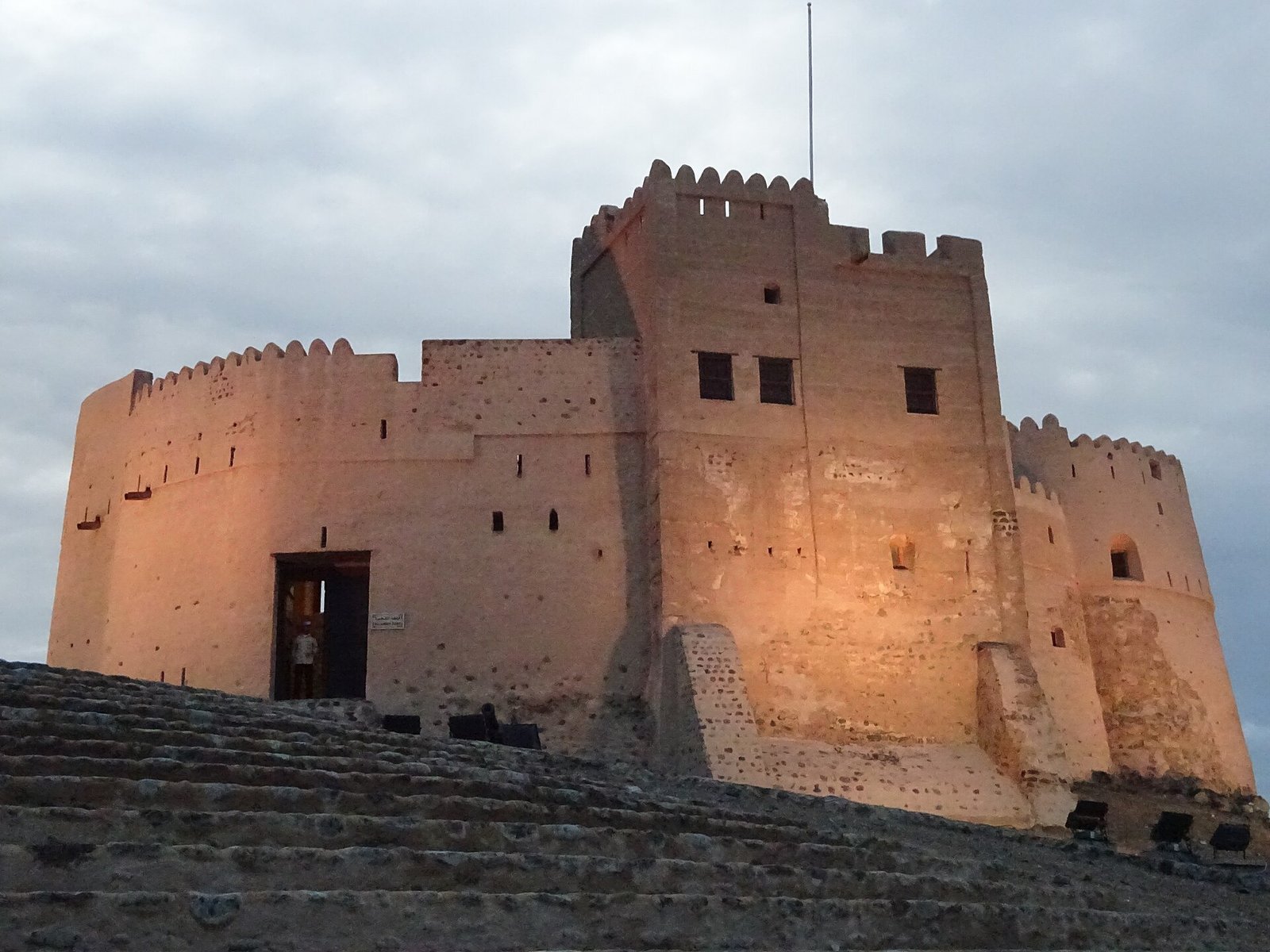
Fujairah joined the newly formed United Arab Emirates in 1971, and its leaders soon saw that the emirate's eastern shore could become a gateway for the whole nation. Under the leadership of the Al Sharqi family, who have guided Fujairah for generations, construction of the port began in 1978 and full operations started in 1983, with a first quay just 370 meters long. The port has since grown steadily, berth by berth, to more than 9.5 kilometers of quays.
The Port of Fujairah credits the patronage and vision of the Ruler of Fujairah for its growth into a global energy hub, and the Al Sharqi family continues to champion the emirate's development in maritime trade, energy, tourism and the environment. Readers can learn more on our page about the Al Sharqi family of Fujairah and the wider royal families of the Middle East.
Bunkering and storage
Bunkering, the supply of fuel to ships, is at the heart of the port's identity. Fujairah ranks among the world's three largest bunkering hubs, alongside Singapore and Rotterdam, and its anchorage is busy around the clock with tankers, container ships and bulk carriers taking on fuel. The industry gathers here each year for the Fujairah Bunkering and Fuel Oil Conference (FUJCON) and the Energy Markets Forum.
Behind the harbor, the Fujairah Oil Industry Zone hosts terminals operated by leading international and national energy companies. Together they provide nearly 18 million cubic meters of storage for crude and refined products, the largest commercial capacity of its kind in the Middle East. Fujairah is also the terminus of the Abu Dhabi Crude Oil Pipeline from Habshan, which carries crude across the country directly to the east coast, and the national energy company ADNOC has developed large underground crude storage nearby.
Since 2017, AD Ports Group's Fujairah Terminals has operated the container, general cargo, ro-ro and cruise business under a 35-year concession. A major expansion inaugurated in 2021 lengthened the quay, deepened the berths to 15 meters and raised capacity to about 720,000 TEUs of containers and 1.3 million tonnes of general cargo a year. The terminal has handled exceptional project cargo, including wind-turbine blades and heavy gas turbines.
The port is connected to the Etihad Rail national network, which links Fujairah with Abu Dhabi, Dubai and the industrial hubs of the west, moving goods by rail rather than road. Learn about the UAE's wider infrastructure on amazing things being built and UAE: We the UAE 2031.
Fujairah's cruise terminal, operated by Fujairah Terminals, welcomes ships during the Gulf winter cruise season, typically November to April, often as a call on itineraries that also include Dubai, Abu Dhabi, Muscat and Khasab. Passengers step ashore beside the mountains, a short drive from the fort, the heritage village and the beaches of the Al Aqah coast. Calls vary by season, so check your cruise line's current itinerary.
For cruise options, see cruise lines in the Gulf and Red Sea, cruise ports and terminals and yacht itineraries. Private yachts heading to Musandam's fjords often start their journey on this coast.
Port at a glance
Deep-water berths able to receive very large crude carriers, serving the storage terminals behind the port.
Official site ↗AD Ports Group's container, general cargo, ro-ro and cruise terminal.
Official site ↗Up to 174 anchor positions where vessels take on fuel, supplies and crew.
Conveyor-fed berths exporting aggregates quarried in the Hajar Mountains for construction across the region.
A cluster of storage and energy terminals, among the largest in the world outside the major refining centers.
Fujairah 2040 plan
Fujairah's long-term plan builds on the port's strengths, with continued investment in storage, logistics, clean energy and green shipping fuels, alongside tourism, a renewed corniche and new resorts. The aim is a diversified, sustainable economy in which the port remains the engine. See our Fujairah 2040 page and the UAE's national visions.
Business visitors and cruise passengers have fine choices close by; our Fujairah guide lists every leading resort.
A stylish beachfront retreat with mountain views and an infinity pool.
Official site ↗An Arabian-style beach resort, a favorite with families.
Official site ↗Sea-facing rooms and a long private beach.
Official site ↗A resort beside Snoopy Island with its own dive center.
Official site ↗A beachfront hotel close to the city and port.
A practical, central choice for port business.
Official site ↗A restored fort, centuries old, and a reconstructed traditional village beside it.
One of the largest mosques in the UAE, a few minutes from the port.
A seafront promenade with views of ships waiting at anchor offshore, a striking sight at dusk.
The oldest known mosque in the UAE.
Snorkeling among reef fish and turtles.
Questions about the Port
It lies on the Gulf of Oman outside the Strait of Hormuz, giving ships direct ocean access. It is one of the world's top three bunkering hubs and the Middle East's largest commercial oil storage center.
The Fujairah Ports Authority oversees the port. AD Ports Group's Fujairah Terminals operates the container, general cargo, ro-ro and cruise terminal under a 35-year concession.
Yes, during the winter cruise season, usually November to April, as part of Gulf and Oman itineraries. Check current itineraries with cruise lines.
Fly nonstop to Dubai on Emirates from one of eleven US cities, then drive about 90 minutes to Fujairah.
Ultra-Luxury Real Estate · Own Here
The places you discover as a guest are the places to own. Freehold for foreign buyers in designated areas, with a golden visa route from AED 2 million.
Ultra-Luxury Tourism & Ultra-Luxury Real Estate
Luxury Real Estate
See the homes, the communities and how buyers from abroad can own in Fujairah, on its Luxury Real Estate page, where its Founding Partners, chosen by TheMiddleEast.com, are presented.
Places for Fujairah’s Founding Partners are open. For agencies and developers ›
Weather
Average day highs, night lows, sea temperature and rainy days for each month, in Fahrenheit and Celsius side by side. The months in gold are the most comfortable for visiting.
| Month | Day high | Night low | Sea | Rainy days | |||
|---|---|---|---|---|---|---|---|
| °F | °C | °F | °C | °F | °C | ||
| Jan | 76° | 25° | 61° | 16° | 76° | 24° | 3 |
| Feb | 79° | 26° | 63° | 17° | 74° | 24° | 2 |
| Mar | 85° | 30° | 68° | 20° | 76° | 24° | 1 |
| Apr | 93° | 34° | 76° | 24° | 79° | 26° | 1 |
| May | 102° | 39° | 83° | 28° | 85° | 29° | 1 |
| Jun | 103° | 40° | 88° | 31° | 91° | 33° | 1 |
| Jul | 100° | 38° | 88° | 31° | 92° | 33° | 2 |
| Aug | 99° | 37° | 86° | 30° | 90° | 32° | 1 |
| Sep | 98° | 37° | 83° | 29° | 90° | 32° | 0 |
| Oct | 93° | 34° | 78° | 25° | 89° | 31° | 1 |
| Nov | 87° | 31° | 71° | 22° | 84° | 29° | 2 |
| Dec | 80° | 27° | 64° | 18° | 79° | 26° | 1 |
Averages for 2020–2024, Open-Meteo historical weather (ERA5). Sea temperatures: 2023–2024. Rainy days: days with at least 1 mm (0.04 in) of rain. Weather data by Open-Meteo.com.
Checked October 2026. Prices and dates are approximate and can change. See our standard.