Bardo National Museum
A former beylical palace housing one of the world's largest collections of Roman mosaics. Allow at least half a day.

Home›Culture›Timeline›Tunisia: History and Culture
Tunisia
Tunisia history packs three thousand years into a country you can cross in a day, from Phoenician Carthage to the Roman amphitheater of El Jem and the holy city of Kairouan. Tunisian culture is relaxed, Mediterranean and deeply hospitable, a perfect add-on to any Tunisia vacation.
At a glance
Eras of Tunisia history
Phoenician settlers from Tyre founded Carthage, by tradition in 814 BC, and it grew into one of the great trading powers of the ancient Mediterranean. Rome later rebuilt it as the capital of the province of Africa, and the countryside filled with cities whose ruins still stand: Dougga on its hilltop, Bulla Regia with its underground villas, and El Jem, whose amphitheater is among the largest the Romans ever built.
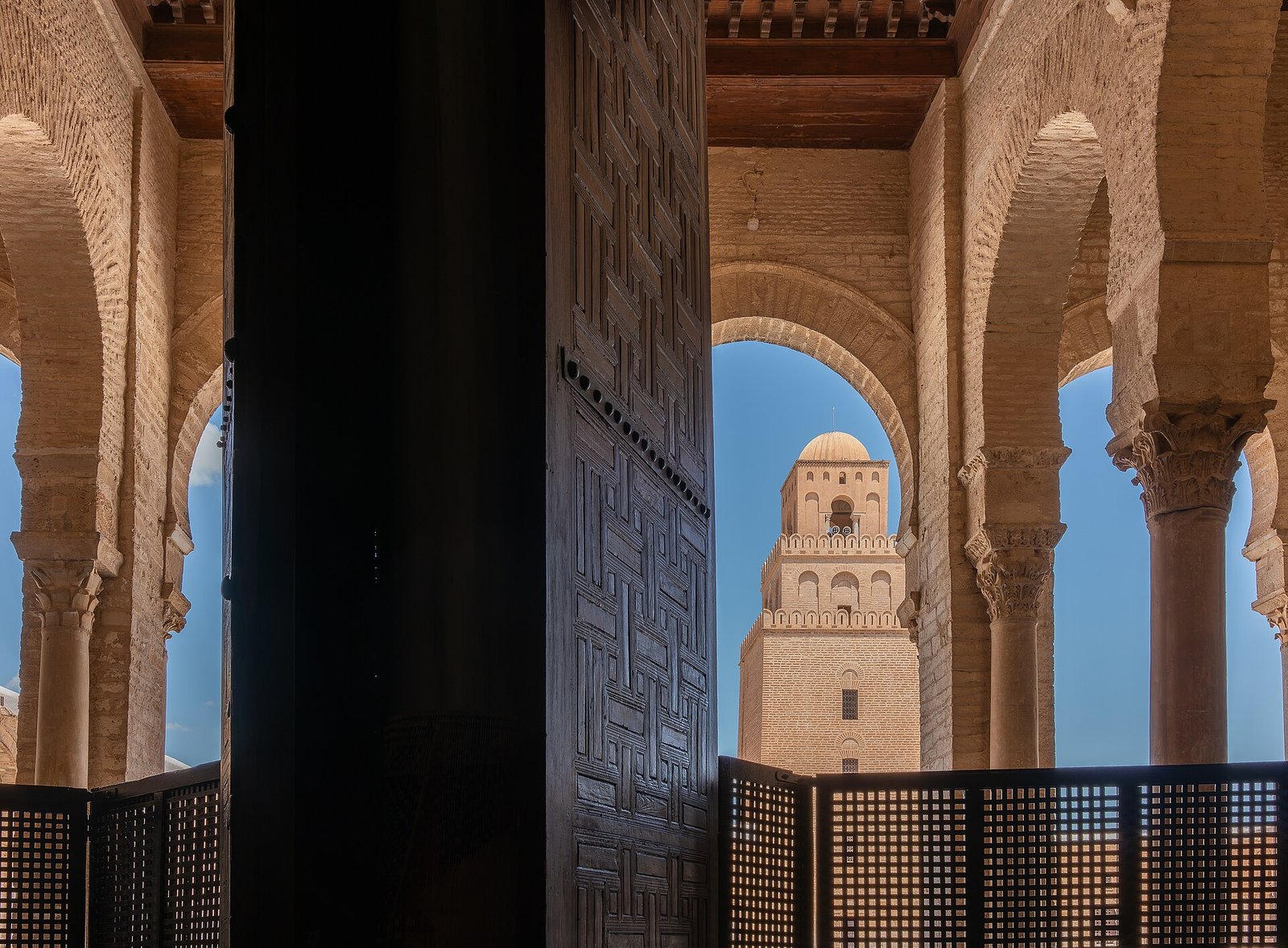
In the 7th century the city of Kairouan was founded, and its Great Mosque became one of the most important early centers of Islamic learning. The Aghlabid, Fatimid and Hafsid dynasties built the medinas of Tunis, Sousse and Monastir, with their ribats, souks and madrasas. Andalusian families arriving from Spain brought new crafts and music.
Tunis later became the seat of the Husainid beys, who ruled for 250 years and built elegant palaces. Tunisia became independent in 1956 and is known for its early commitment to education. See the regional history timeline.
Languages and five useful
Tunisian Arabic (Derja) is the everyday language, French is common, and many in tourism also speak Italian, German or English.
| English | Local phrase | Say it like |
|---|---|---|
| Hello | Aslema | as-LEH-ma |
| Thank you | Yaishek | YAI-shek |
| Yes / No | Ey / Le | ay / leh |
| How much? | Kaddesh? | kad-DESH |
| Beautiful | Mezyen | MEZ-yen |
Tunisia's museums hold the finest Roman mosaics in the world, scenes of hunting, harvests, sea gods and the poet Virgil. The blue-and-white village of Sidi Bou Said, a World Heritage Site since 2026, with its studded doors and wrought-iron window grilles, inspired painters such as Paul Klee and August Macke. Nabeul is known for pottery, Kairouan for knotted carpets, and the chechia, a red felt cap, is still made by hand in the souks of Tunis.
Malouf, the Andalusian classical music of Tunisia, is kept alive by orchestras and festivals, and the Carthage International Festival stages concerts in the Roman theater each summer. Explore the wider story of Islamic art and architecture.
Tunisian food has a spark: harissa, the red pepper paste recognized by UNESCO, enlivens almost everything. Try brik, a crisp pastry folded around egg and tuna; lablabi, a chickpea soup for cold mornings; and couscous with fish on the coast. Ojja brings eggs poached in a spicy tomato sauce, and slata mechouia is a smoky grilled salad.
Tunisia is one of the world's largest producers of olive oil, and its Deglet Nour dates are exported worldwide. Finish with mint tea topped with pine nuts in a cafe overlooking the sea, and pick up a bottle of single-estate olive oil to take home.
A former beylical palace housing one of the world's largest collections of Roman mosaics. Allow at least half a day.
The Antonine Baths, Punic ports, Byrsa Hill and Roman villas, spread among gardens near the sea. A UNESCO World Heritage Site.
A colossal Roman arena that rises from a small town; it hosts an international symphonic music festival in summer.
One of the oldest and most influential mosques in North Africa, with a forest of ancient columns. Non-Muslims may view the courtyard.
Perhaps the best-preserved Roman small town in North Africa, with theater, capitol and temples among olive groves.
Weddings stretch over days with henna nights and music; the Sufi stambali tradition and the Djerba island heritage of pottery and fishing endure. Djerba's El Ghriba synagogue and its centuries-old Jewish community are part of the island's story, and Djerba itself was inscribed by UNESCO in 2023 for its unique settlement pattern. Learn more on our page about Jewish heritage across the region.
Carthage was famed in antiquity for its circular harbor, whose outline can still be traced today. Scenes for a famous space-opera film series were shot in Tunisia's desert, and some sets still stand near Tozeur. Kairouan is considered one of Islam's holy cities. Plan your trip with our Tunisia luxury travel guide, stay in Sidi Bou Said or relax on Djerba.
Ultra-Luxury Real Estate · Own Here
The places you discover as a guest are the places to own. Homes and apartments with the regional governor's authorization; agricultural land is reserved for Tunisians.
Ultra-Luxury Tourism & Ultra-Luxury Real Estate
Checked October 2026. Prices and dates are approximate and can change. See our standard.