Petra
The Treasury, the Monastery and hundreds of carved tombs, reached through the narrow Siq. One of the New Seven Wonders of the World.
Official site ↗
Home›Culture›Timeline›Jordan: History and Culture
Jordan
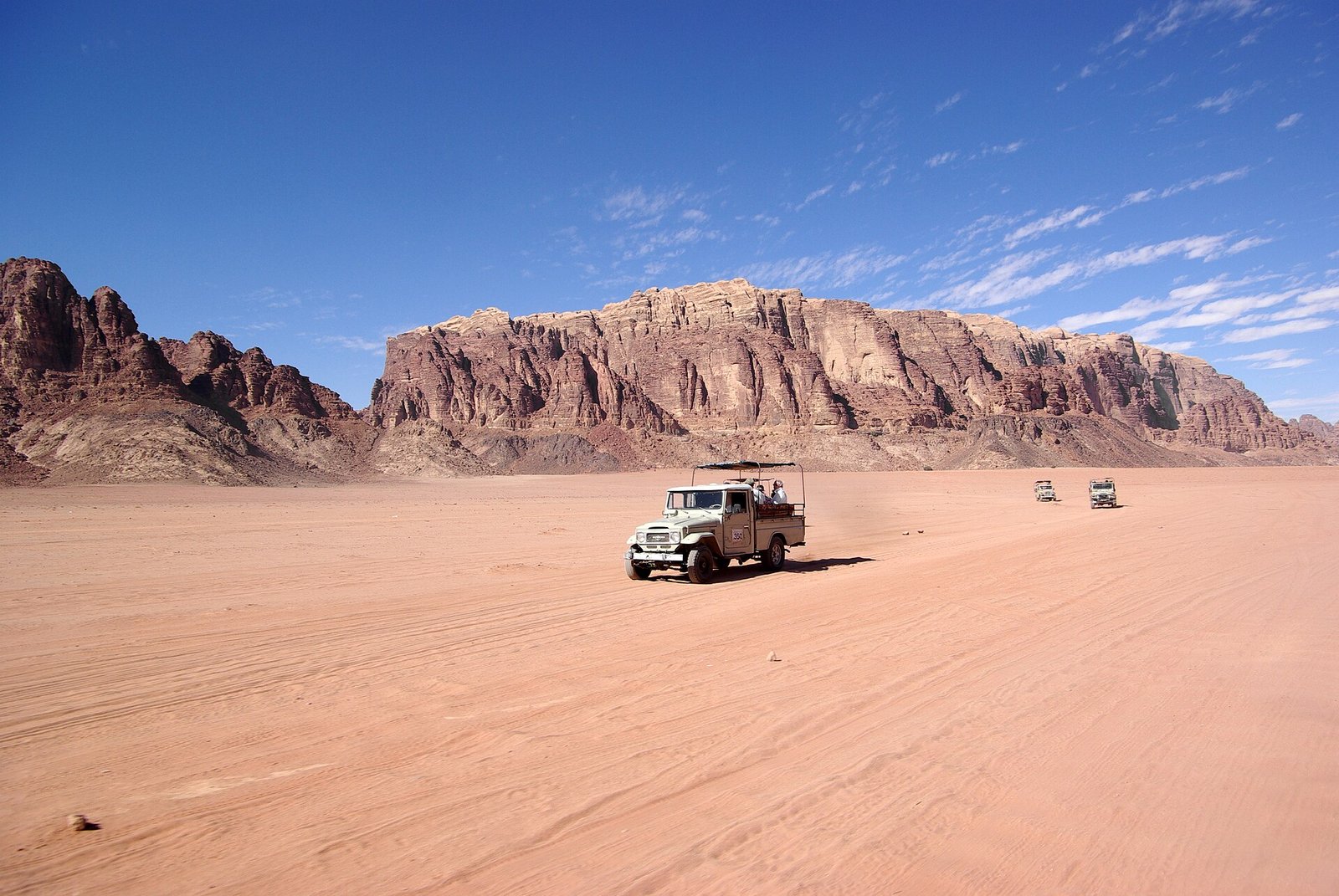
Jordan history spans the Nabataean rose-red city of Petra, the colonnaded Roman streets of Jerash and the Bedouin camps of Wadi Rum. Jordanian culture is famous for its hospitality, and a Jordan vacation feels like being welcomed into a very old, very generous home.
At a glance
Eras of Jordan history
At Ain Ghazal near Amman, archaeologists found some of the oldest large human statues ever made, about nine thousand years old. Ancient kingdoms such as Ammon, Moab and Edom traded along the King's Highway, one of the world's oldest continuously used roads.
From around the 4th century BC the Nabataeans, Arab traders who mastered the incense and spice routes, carved Petra into the sandstone cliffs and engineered water systems to sustain a city in the desert. Rome later absorbed the kingdom, and cities of the Decapolis, above all Jerash and Gadara (Umm Qais), flourished. Byzantine churches left superb mosaics, including the famous map of the Holy Land in Madaba.
In the 8th century the Umayyad caliphs built desert castles such as Qusayr Amra, with its painted bath halls. Centuries of Ayyubid, Mamluk and Ottoman history followed. The Hashemite Kingdom traces its modern story to 1921, and full independence came in 1946. Read about the royal family of Jordan and the ancient incense route. The basalt town of Umm Al-Jimal in the north joined the World Heritage List in 2024.
Languages and five useful
Jordanian Arabic is gentle and easy to follow; English is widely spoken in Amman and at major sites.
| English | Local phrase | Say it like |
|---|---|---|
| Welcome | Ahlan wa sahlan | AH-lan wah SAH-lan |
| Thank you | Shukran | SHOOK-ran |
| God bless your hands (to a host or cook) | Yislamu idayk | yis-LA-moo ee-DAYK |
| How much? | Addesh? | ad-DESH |
| Of course / gladly | Tikram | TIK-ram |
Madaba is the mosaic capital of the Middle East, where artisans still set tiny stones by hand. Bedouin women weave goat-hair tents and bright rugs, and the bottles of colored sand layered into desert scenes are a classic Jordan keepsake. Amman's Jabal Al Weibdeh and Jabal Amman districts are home to galleries, the Darat al Funun arts center and design boutiques along Rainbow Street.
Traditional dabke line dancing appears at weddings and festivals, and the Jerash Festival of Culture and Arts brings music to the Roman stage each summer. Learn more about Bedouin heritage and desert culture.
Mansaf, the national dish, is lamb cooked in a sauce of dried fermented yogurt called jameed and served over rice with almonds and pine nuts; it is traditionally eaten from a shared platter. Maqluba, an upside-down pot of rice, eggplant and chicken, is turned out with ceremony at the table. Zarb, lamb and vegetables slow-cooked in a pit under the sand, is the dinner to have in Wadi Rum.
Breakfast means hummus, falafel and fresh bread from bakeries such as Amman's legendary Hashem. Knafeh, warm cheese pastry soaked in syrup, is a must. Coffee spiced with cardamom is poured in tiny cups; shake the cup gently when you have had enough. See our page on Arabic coffee and dates.
The Treasury, the Monastery and hundreds of carved tombs, reached through the narrow Siq. One of the New Seven Wonders of the World.
Official site ↗The national museum, displaying the Ain Ghazal statues and Dead Sea Scroll fragments.
Official site ↗One of the best-preserved Roman provincial cities, with an oval plaza, theaters and a colonnaded main street.
The 6th-century mosaic map in St. George's Church and the hilltop view toward the Jordan Valley.
Revered as the place of the baptism of Jesus, a UNESCO site with ancient churches and pools.
Official site ↗Hospitality, karam, is the soul of Jordanian culture: a guest is offered coffee and food before any business is discussed. Bedouin tribes keep alive poetry, falconry and camel racing, and their cultural space in Petra and Wadi Rum is recognized by UNESCO. See also Arab hospitality and the majlis.
The Dead Sea, shared with its neighbors, is so salty that you float effortlessly. Wadi Rum's red dunes have stood in for Mars in several Hollywood films. Petra was largely unknown to the Western world until 1812. Plan it all with our Jordan luxury travel guide and our page on visiting Petra. In 2026 the coral reefs of the Aqaba Marine Reserve were inscribed as a natural World Heritage Site; dive them from Aqaba's Red Sea resorts.
Ultra-Luxury Real Estate · Own Here
The places you discover as a guest are the places to own. A permit from the Department of Lands and Survey for each property.
Ultra-Luxury Tourism & Ultra-Luxury Real Estate
Checked October 2026. Prices and dates are approximate and can change. See our standard.