Dubai
Al Marmoom Camel Racetrack
Dubai's main track sits in the desert south of the city and hosts the Al Marmoom Heritage Festival each spring. Races are free to watch, and the drive-along action is exciting to see.

Home›Sport›Camel Racing and Falconry
Sport
Camel racing and falconry are the oldest sports of the Arabian Peninsula, and they are thriving. Watching camels thunder down a desert track at dawn, or a falcon stoop at more than 200 miles an hour, is one of the great travel experiences in the Gulf.
Updated
At a glance
For centuries, camels carried families and goods across Arabia, and falcons brought food to the table in a land with little else to hunt. Both became sources of pride, and both became sports. Today they are celebrated by national federations, broadcast on dedicated television channels and supported by prize money that rivals many Western sports. They are also a window into the values of Bedouin heritage: patience, horsemanship and deep knowledge of animals.
Modern camel racing uses small remote-controlled robot jockeys, steered by owners who drive alongside the track in four-wheel drives, which makes the spectacle all the more memorable. Falconry, meanwhile, is recognized by UNESCO as a living human heritage, in a shared listing led by the United Arab Emirates together with Saudi Arabia, Qatar, Morocco and many other nations. See our guide to the region's living heritage.
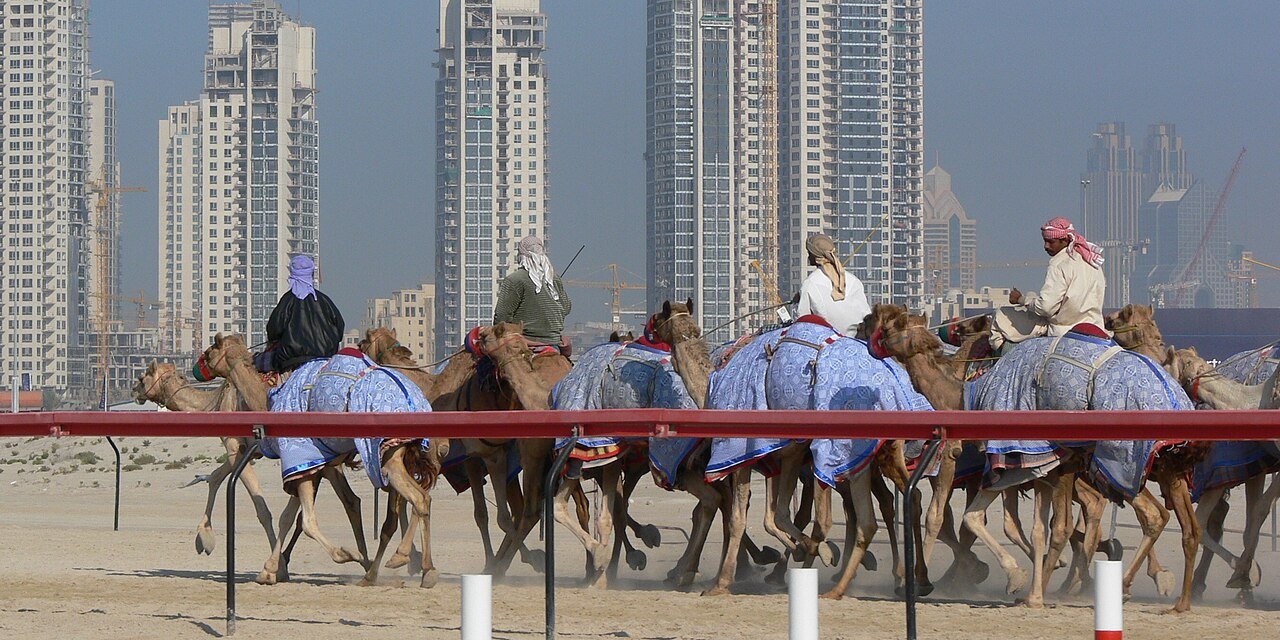
The racing season runs from October to April, with races usually in the early morning.
Dubai's main track sits in the desert south of the city and hosts the Al Marmoom Heritage Festival each spring. Races are free to watch, and the drive-along action is exciting to see.
One of the largest tracks in the Emirates, east of Abu Dhabi city. It hosts major festivals during the winter, including events linked to the Sheikh Zayed Festival season.
Qatar's racing heartland, about 40 minutes west of Doha. Its season culminates in the HH The Amir Sword camel festival for purebred Arabian camels.
The largest camel festival in the world, held each winter about 120 kilometers northeast of Riyadh on a site of more than 225 square kilometers. It combines the famed mazayen camel beauty contests, races, poetry and markets, with prize money in the hundreds of millions of riyals in recent editions.
A celebrated winter festival in the Western Region of Abu Dhabi famous for its camel beauty pageant, along with saluki races, falconry and traditional crafts. A good companion to a stay in Liwa.
Omani racing has its own style, with tracks in many towns and festivals tied to national holidays. Ask your hotel in Muscat for race dates.
Falconry is both a sport and an art; these are the places to see it at its best.
The club's calendar includes the International Saudi Falcons and Hunting Exhibition each October and the King Abdulaziz Falconry Festival in late November, with prizes of more than SAR 38 million (about US$10 million) in 2026.
The world's largest falcon hospital welcomes visitors on guided tours, where you can watch vets at work and hold a falcon on your gloved arm. One of the most rewarding visits in the Emirates.
The Abu Dhabi International Hunting and Equestrian Exhibition, held each late summer, is the region's showcase of falconry, salukis and equestrian life. The 23rd edition ran from August 28 to September 6, 2026.
In the heart of Doha's old market, shops sell falcons, hoods and gloves, and a falcon hospital is next door. Visit in the evening when the souq is liveliest.
Many luxury desert camps and lodges arrange private falconry shows at sunrise or sunset. It is the best way to see a falcon fly up close.
The saluki, an ancient desert hound prized for its speed, races at heritage festivals across the Gulf, and is shown at ADIHEX and the Al Dhafra Festival. Its elegance makes it a favorite with photographers.
A traditional 60-foot dhow sailing race from Sir Bu Nair island to the Dubai coast that recalls the return of the pearl divers. Check the Dubai International Marine Club for the current season's date.
Official site ↗Dhow sailing races of 22, 43 and 60 feet and traditional rowing races fill the winter calendar. Watch from the shore near Dubai Harbour or the Abu Dhabi Corniche. See our page on pearling history.
Typical months; dates vary each year and many follow the lunar calendar.
| Event | Where | Typical month |
|---|---|---|
| ADIHEX | Abu Dhabi | Late August to early September |
| Saudi Falcons and Hunting Exhibition | Malham, Riyadh | October |
| King Abdulaziz Falconry Festival | Malham, Riyadh | November to December |
| King Abdulaziz Camel Festival | Al-Sayahid, Riyadh region | December to January |
| Al Dhafra Festival | Madinat Zayed, Abu Dhabi | Winter |
| Al Marmoom Heritage Festival | Dubai | Spring |
| Al Gaffal Dhow Race | Sir Bu Nair to Dubai | Late spring (dates to be confirmed) |
Arrive early, as camel races usually begin soon after sunrise and finish by mid-morning. Spectators are welcome and admission is generally free, but stay behind barriers and away from the track road. Ask before photographing people, and dress modestly. Falcons are treasured animals; do not touch a bird unless its handler invites you.
Combine a race morning with a stay in Dubai or Abu Dhabi, or a desert night at a luxury camp. Specialist operators can arrange private falconry, camel farm visits and saluki demonstrations; see private access experiences.
Small remote-controlled robot jockeys, guided by owners driving alongside the track. Human child jockeys were replaced by robots across the Gulf in the 2000s.
Yes, at places like the Abu Dhabi Falcon Hospital and at many desert camps, a handler will place a falcon on your gloved arm.
Roughly October to April, with the biggest festivals in December to March.
Top racing camels can reach about 40 miles an hour in short bursts and hold high speeds over several miles.
Ultra-Luxury Real Estate · Own Here
Across the Middle East, the finest resorts and the finest homes now sit side by side, and many international buyers own before they ever visit.
Ultra-Luxury Tourism & Ultra-Luxury Real Estate
Checked October 2026. Prices and dates are approximate and can change. See our standard.