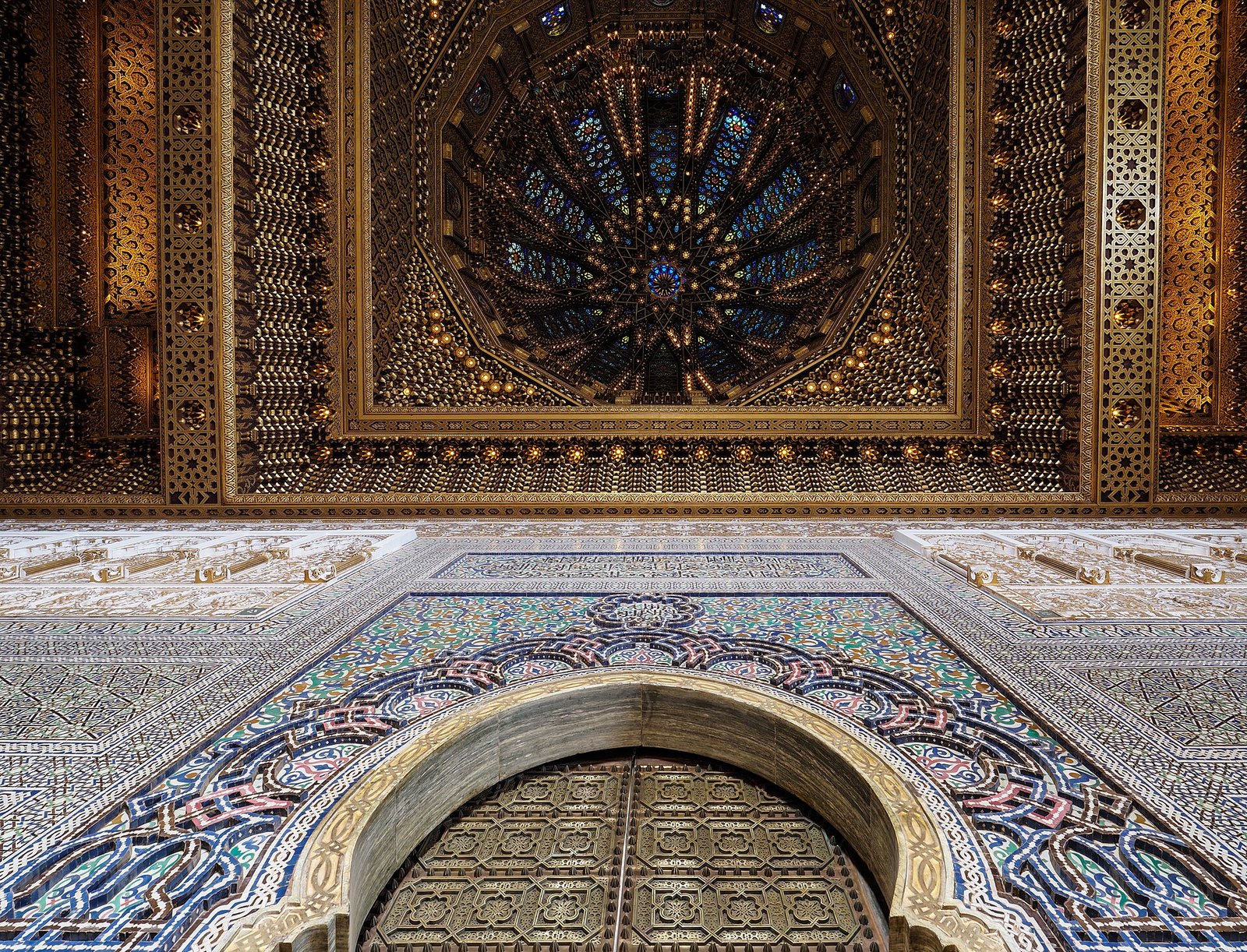
Mausoleum of Mohammed V and Hassan Tower
The resting place of Mohammed V and Hassan II, guarded by the Royal Guard in ceremonial dress, beside the unfinished 12th-century minaret. Open to all visitors. Pair it with a stay in Rabat.

Home›Culture›Royal Families›Alaouite dynasty
Royal Families · Morocco
The Alaouite dynasty has led Morocco since the 1660s, making Morocco's royal family one of the longest-reigning houses in the world and a living thread through any Morocco vacation, from the palaces of Fez to the royal capital, Rabat.
At a glance
The Alaouites trace their line to the family of the Prophet Muhammad, through ancestors who settled in the Tafilalt oasis region of southeastern Morocco centuries ago. That descent, shared with Jordan's Hashemites, gives the monarch the religious title Amir al-Mu'minin, Commander of the Faithful, which remains central to the institution today.
The dynasty's political story begins with Moulay al-Rashid, who took Fez in 1666 and united much of the country under one rule. From that moment the Alaouites became Morocco's reigning house, and they have remained so ever since, a continuity of more than 350 years that few royal families anywhere can match. To understand the wider story of the country, see our guide to Moroccan history and culture.
Moulay Ismail, who reigned from 1672 to 1727, is the figure most visitors meet first. He made Meknes his imperial capital and surrounded it with monumental gates, granaries and stables on a scale that still astonishes. His long reign gave the young dynasty its firm footing.
Sultan Mohammed III holds a special place for Americans. In 1777 Morocco became one of the first nations to recognize the newly independent United States, and the Treaty of Peace and Friendship signed in 1786 is the oldest unbroken treaty in American history. In 1821 a later sultan gave the United States a building in Tangier, now the Tangier American Legation, the first American public property abroad and today a museum and cultural center. It is a lovely stop on a visit to Tangier.
Mohammed V, who reigned from 1927 to 1961, is honored as the father of modern Morocco. He led the country to independence in 1956 and took the title of King in 1957. His mausoleum in Rabat, beside the Hassan Tower, is one of the most visited monuments in the kingdom.
King Hassan II reigned from 1961 to 1999. His era is remembered for state building and for the Hassan II Mosque in Casablanca, completed in 1993, whose minaret rises above the Atlantic. It is one of the few working mosques in the region that welcomes non-Muslim visitors on guided tours; plan it into a stay in Casablanca.
King Mohammed VI
His Majesty King Mohammed VI has reigned since 23 July 1999. His reign has brought a new constitution in 2011, major investment in high-speed rail, ports and renewable energy, and a strong emphasis on Morocco's place as a bridge between Africa, Europe and the Arab world. Throne Day, celebrated every 30 July, marks the anniversary of his accession.
The heir is His Royal Highness Crown Prince Moulay El Hassan, born in 2003, who increasingly represents the King at national and international occasions. The country's long-range ambitions are set out in the New Development Model to 2035.
Members of the royal
Several members of the family lead institutions known well beyond Morocco. Her Royal Highness Princess Lalla Hasnaa presides over the Mohammed VI Foundation for Environmental Protection, which runs the Blue Flag program for clean beaches along Morocco's coasts. His Royal Highness Prince Moulay Rachid heads the foundation behind the Marrakech International Film Festival, one of the most glamorous dates on the cultural calendar in Marrakech.
The King is addressed as His Majesty King Mohammed VI; in writing, "His Majesty the King" is correct on second mention. The heir is His Royal Highness Crown Prince Moulay El Hassan. Princes carry the honorific Moulay and princesses Lalla. The royal standard and portraits of the King are treated with great respect, and visitors should do the same.
Royal palaces in Rabat, Fez, Marrakech and other cities are working residences and are not open inside, but their great ceremonial gates, such as Dar al-Makhzen in Fez, are among the most photographed sights in the country.
Places where the dynasty's history can be seen and appreciated on a luxury Morocco vacation.
The resting place of Mohammed V and Hassan II, guarded by the Royal Guard in ceremonial dress, beside the unfinished 12th-century minaret. Open to all visitors. Pair it with a stay in Rabat.
Moulay Ismail's grand gate and royal granaries show the scale of the early Alaouite capital. An easy day from Fez.
Seven bronze doors set in zellige tile, the ceremonial face of the royal palace in Fez el-Jdid. Seen from the square outside; see Fez.
Completed in 1993 on the edge of the Atlantic, with guided tours for non-Muslim visitors at set times.
A gift from the sultan to the United States in 1821 and a reminder of the oldest friendship in American diplomacy.
Official site ↗Family and a kingdom
For a traveler, the Alaouite story explains much of what makes Morocco feel distinct: its imperial cities, its enduring crafts, and its long and warm ties with the United States. Start planning with our luxury Morocco vacation guide, and see how Morocco's royal house compares with others across the region on our royal families of the Middle East page.
Ultra-Luxury Real Estate · Own Here
Across the Middle East, the finest resorts and the finest homes now sit side by side, and many international buyers own before they ever visit.
Ultra-Luxury Tourism & Ultra-Luxury Real Estate
Checked October 2026. Prices and dates are approximate and can change. See our standard.