National Museum of Beirut
Lebanon's main archaeological museum, with Phoenician sarcophagi, Byblos figurines and Roman mosaics, beautifully restored.

Home›Culture›Timeline›Lebanon: History and Culture
Lebanon
Lebanon history begins with the Phoenicians, the seafarers who spread the alphabet, and continues through the temples of Baalbek and the cedar forests of the mountains. Lebanese culture, from its legendary food to its music and nightlife, is one of the most generous in the Mediterranean.
At a glance
Eras of Lebanon history
Byblos (Jbeil) is one of the oldest continuously inhabited towns in the world. From coastal cities such as Byblos, Tyre and Sidon, the Phoenicians sailed the whole Mediterranean, trading cedar wood and purple dye and spreading the alphabet that underlies Greek and Latin script.
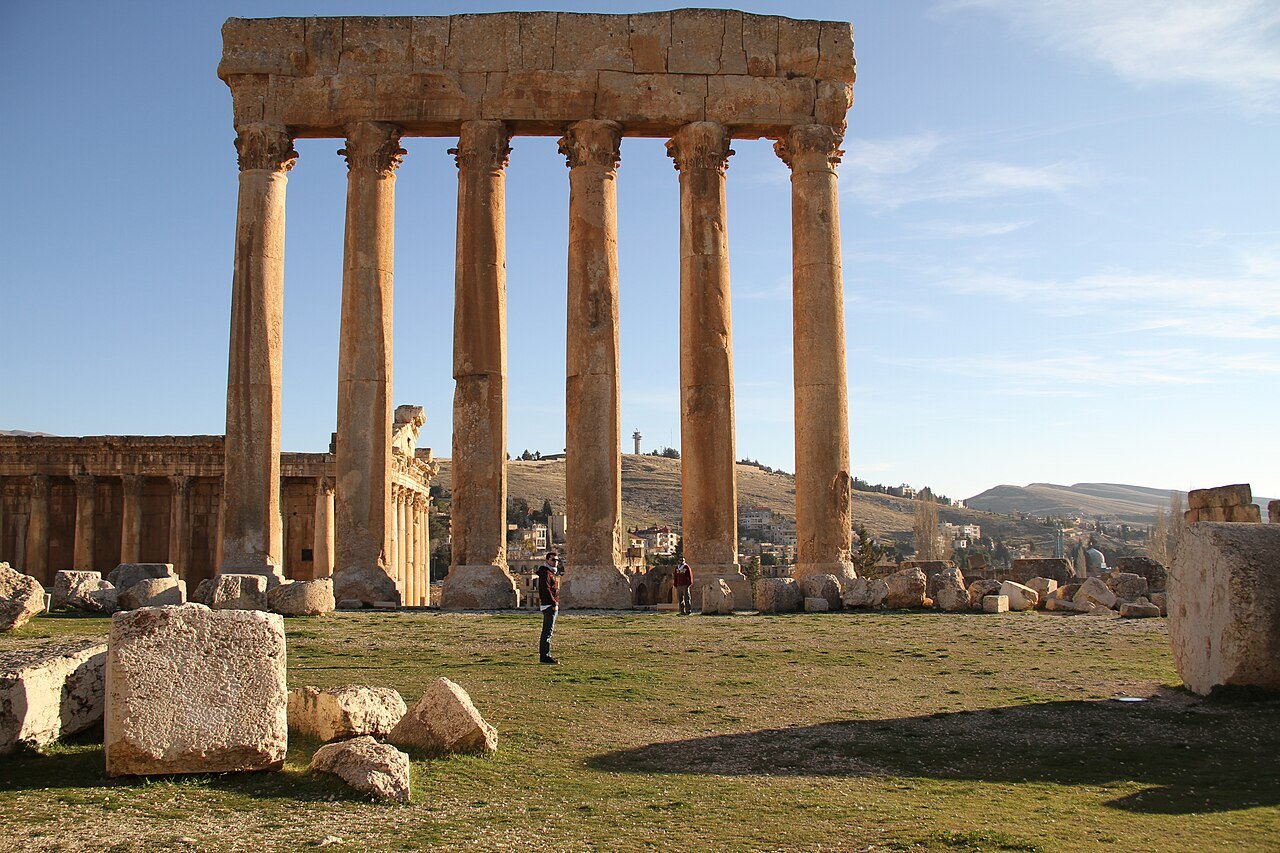
Under Rome, Baalbek in the Bekaa Valley gained the largest temple complex in the Roman world; the columns of the Temple of Jupiter and the superbly preserved Temple of Bacchus still astonish. Beirut was home to a famous Roman school of law. The Umayyad town of Anjar, with its arcaded streets, dates to the 8th century.
Later centuries brought Crusader-era castles, Mamluk mosques in Tripoli and centuries of Ottoman administration, when Mount Lebanon developed its own distinct identity. Modern Lebanon gained independence in 1943 and became famous for banking, publishing, education and the arts. See the regional history timeline.
Languages and five useful
Lebanese Arabic is sprinkled with French and English, and a single sentence may use all three. A greeting like 'Hi, kifak, ça va?' is perfectly normal.
| English | Local phrase | Say it like |
|---|---|---|
| Hello | Marhaba | MAR-ha-ba |
| How are you? | Kifak? / Kifik? | KEE-fak / KEE-fik |
| Thank you | Merci / Shukran | mair-SEE / SHOOK-ran |
| Cheers! (to health) | Kesak | KAS-sak |
| Enjoy your meal | Sahtein | sah-TAYN |
Beirut's Ottoman-era mansions with triple-arched windows, its Art Deco apartment blocks and its contemporary galleries tell a story of a city that has always loved design. Lebanese fashion designers dress stars on red carpets worldwide, and the writer Khalil Gibran, born in Bsharri, remains one of the best-selling poets in history.
Fairuz, whose voice opens mornings across the Arab world, and the Baalbek International Festival, held among the Roman temples, are cultural treasures. Traditional crafts include glass blowing, Jezzine cutlery with bird-shaped handles, and mother-of-pearl inlay. See the region's wider music traditions.
Lebanese food has conquered the world. A mezze table might bring tabbouleh, hummus, moutabal, fattoush, kibbeh and warm bread, followed by grilled meats and fish. Manakish, flatbread topped with zaatar and olive oil, is the morning ritual, and knafeh in Tripoli is a pilgrimage for sweet lovers. Many of these dishes are shared Levantine classics.
Lebanon is also one of the oldest wine-producing lands on earth. The Bekaa Valley's wineries, including Château Ksara, founded in 1857, and Château Musar, are known internationally, and arak, the anise spirit, is the classic partner for mezze. Mountain villages make their own olive oil, rose water and orange-blossom water, and a visit to a family-run press or distillery is a lovely half-day outing. Explore more on our best restaurants page.
Lebanon's main archaeological museum, with Phoenician sarcophagi, Byblos figurines and Roman mosaics, beautifully restored.
A white Venetian-Ottoman villa devoted to modern and contemporary art.
Official site ↗Layers of history from Neolithic huts to a Crusader-era castle, beside a charming harbor and old souk.
Colossal Roman temples, including the Temple of Bacchus, one of the best-preserved in the Roman world.
Spectacular limestone caves, with the lower gallery explored by boat.
Family Sunday lunches stretch for hours, coffee is offered to every visitor, and dabke dances fill weddings. Christian and Muslim holidays are celebrated side by side, and the Qadisha Valley, the Valley of the Saints, shelters ancient monasteries among the Cedars of God. See Christian holy sites for more.
The word Bible comes from Byblos, through the Greek word for papyrus, once traded through its port. The cedar on Lebanon's flag appears in the Epic of Gilgamesh. You can ski in the mountains and swim in the sea on the same day in spring. Lebanon's diaspora, many times larger than its population at home, has carried Lebanese food, music and enterprise to every continent, from São Paulo to Detroit. Americans of Lebanese descent include celebrated figures in medicine, business and entertainment, so many visitors arrive already knowing a little of the culture. Plan your visit with our Lebanon travel guide and our page on Beirut's hotels and dining.
Ultra-Luxury Real Estate · Own Here
The places you discover as a guest are the places to own. Up to 3,000 square meters without a decree; larger holdings need a decree of the Council of Ministers.
Ultra-Luxury Tourism & Ultra-Luxury Real Estate
Checked October 2026. Prices and dates are approximate and can change. See our standard.