Shah (Imam) Mosque
Covered almost entirely in blue seven-color tiles, its great dome and minarets are one of the summits of Persian architecture. The entrance is turned at an angle so that the prayer hall faces Mecca.

Home›Destinations›Iran›Isfahan
Iran
Isfahan's heritage is one of the wonders of Islamic art: Naqsh-e Jahan Square and its mosques, palaces and bazaar form a single masterpiece of Safavid design. This page explores the monuments, bridges, gardens and crafts of the city once called "half the world."
At a glance
Isfahan was an important city for many centuries, but its golden age began when Shah Abbas I of the Safavid dynasty made it his capital in 1598. He laid out a new royal city of avenues, gardens and monuments, so splendid that a Persian saying called Isfahan "nesf-e jahan": half the world.
Few cities preserve a royal plan so completely. For the wider country, see our page on Iran's heritage and culture and the longer story in Iran: history and culture.
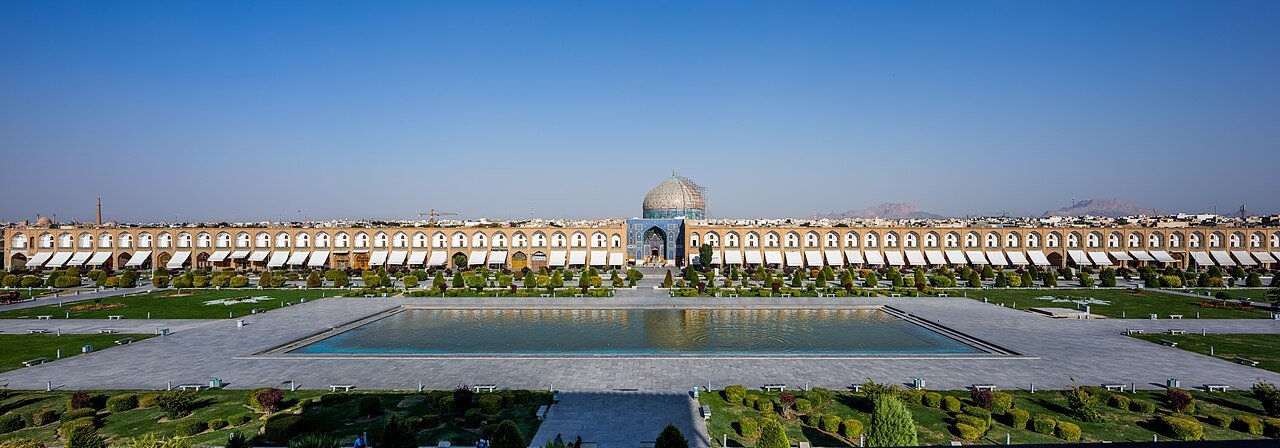
Also called Imam Square, Naqsh-e Jahan is one of the largest city squares in the world, a long rectangle of two-story arcades with a monument at the center of each side. It was the stage for royal ceremonies, markets and polo matches, and the old goalposts still stand at either end. The square is a UNESCO World Heritage site.
Great mosques and palaces
Covered almost entirely in blue seven-color tiles, its great dome and minarets are one of the summits of Persian architecture. The entrance is turned at an angle so that the prayer hall faces Mecca.
A jewel built for the royal household, with no minarets and no courtyard. Its cream-colored dome shifts in tone through the day, and the interior is a masterwork of tile and light.
The royal gateway palace, with a raised terrace for watching events in the square and a music room whose plaster walls are cut with vessel-shaped niches.
The monumental gateway opens into the covered bazaar that runs north toward the old city.
A separate UNESCO site, this mosque shows nearly a thousand years of building, from early Seljuk domes and the four-iwan plan to later Safavid tilework.
A garden pavilion whose twenty slender wooden columns are reflected in a long pool, creating the 'forty columns' of its name. Inside are large historical wall paintings.
The cathedral of the Armenian quarter, founded in the seventeenth century, with richly painted interior walls and a small museum.
Isfahan's historic bridges are works of art as much as engineering. The Si-o-se Pol, the bridge of thirty-three arches, is the longest, and the Khaju Bridge, with its pavilion and stepped weir, was a place for gatherings and music. In the evening the arches glow with light and are a favorite place to stroll.
Crafts
The bazaar remains one of the best places in the region to see Persian crafts being made: hand-painted miniatures, minakari enamel on copper, engraved and hammered metalwork, block-printed cotton called ghalamkar, inlaid khatam marquetry and fine carpets. Many workshops have passed their skills down for generations. See our pages on Islamic art and architecture, Arabic and calligraphy and great mosques and Islamic sites.
The Persian garden tradition flourished in Safavid Isfahan, where avenues such as Chahar Bagh linked palace gardens across the city. The art of the garden, the craft workshops and the celebration of Nowruz together make Isfahan one of the best places to understand Persian living heritage.
Ultra-Luxury Real Estate · Own Here
Across the Middle East, the finest resorts and the finest homes now sit side by side, and many international buyers own before they ever visit.
Ultra-Luxury Tourism & Ultra-Luxury Real Estate
Checked October 2026. Prices and dates are approximate and can change. See our standard.