AlUla
AlUla travel guide: Hegra's Nabataean tombs, Maraya, Elephant Rock, the best luxury resorts in AlUla with star ratings, how to get there and when to go.

Home›The Journal›AlUla in Winter
The Journal
AlUla in winter is one of the great travel experiences of our time: an ancient valley of sandstone and palms in northwest Saudi Arabia, where Hegra's tombs glow at dawn, and where a handful of AlUla luxury resorts now make the desert feel like a private world.
At a glance
The flight from Riyadh takes about ninety minutes, and the last few minutes are the best: the plane drops over a sea of rock, and then the valley appears, a ribbon of date palms between cliffs the color of cinnamon. AlUla has been a crossroads for more than two thousand years, a stop on the incense route where caravans watered their camels on the way north. Today it is the heart of a careful plan, under the Royal Commission for AlUla, to welcome travelers without losing what makes the place remarkable. Our guide to AlUla has the practical detail.
We came in January, when the days are warm and golden and the nights are sharp enough for a fire. That contrast, more than anything, defines AlUla in winter: hiking or exploring in shirtsleeves by day, then wrapping in blankets for dinner under the stars.
The resorts in AlUla are few, and each is distinctive. Banyan Tree AlUla (five stars) sits in the Ashar Valley, its tented villas tucked against sandstone walls, each with a private pool and a view that changes color by the hour. Nearby, Our Habitas AlUla (five stars) is more relaxed, with low wooden villas, yoga at sunrise and a social firepit after dark. In the old town, Dar Tantora The House Hotel (five stars) restores a cluster of mud-brick houses, lit at night by candles and lanterns, a quiet and beautiful way to feel the history of the place.
More is coming. Several major hotel names have announced resorts in the valley, and we will add each one when it opens; for now we list them as To be confirmed. For the wider picture, including tented camps in other deserts, see luxury desert camps and lodges.
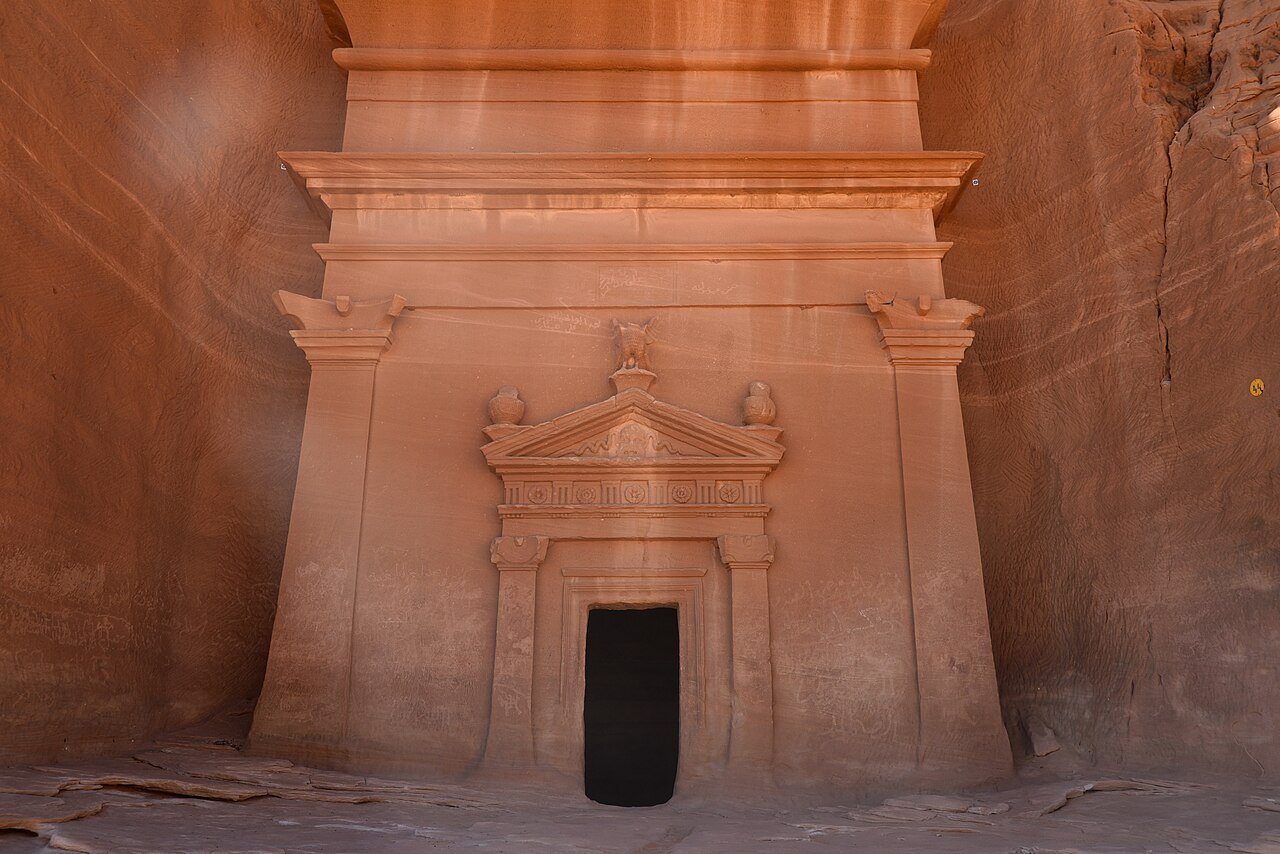
We were at Hegra before sunrise. The site, called Al-Hijr in older texts, was the southern city of the Nabataeans, the same people who built Petra in Jordan, and it holds more than one hundred monumental tombs cut into the rock in the first centuries BC and AD. Most famous is Qasr al-Farid, the Lonely Castle, a single great tomb carved into a freestanding boulder, unfinished at its base, which seems to float on the sand at first light.
Visits are by guided tour, and the guides, many of them from AlUla families, are superb: they read the inscriptions, explain the symbols of eagles and urns above the doorways, and tell the stories of the families buried within. Hegra became Saudi Arabia's first UNESCO World Heritage Site in 2008, and it remains wonderfully uncrowded. If you have seen Petra, go; if you have not, go anyway, and then plan Petra as the second chapter.
Maraya, Elephant Rock
AlUla's modern landmark is Maraya, a concert hall clad entirely in mirrors, set in a canyon so that it seems to disappear into the rocks around it. It hosts concerts and events through the winter season, and its rooftop restaurant is one of the most memorable tables in the Kingdom; check the program before you go.
At sunset everyone gravitates to Elephant Rock, a towering formation shaped by wind into the unmistakable form of an elephant, with low seating and fire pits arranged around its base. We preferred to arrive a little early and watch the colors change in near silence. Another evening we walked the lanes of AlUla Old Town, with its hundreds of mud-brick houses, small cafes and craft shops, and climbed to the fort above it for the view across the palms.
Other days took us to Dadan, the ancient capital of the Dadanite and Lihyanite kingdoms, and to Jabal Ikmah, an open-air library of inscriptions on the canyon walls. One morning we floated over the valley in a hot-air balloon, which we would recommend to anyone with a head for heights.
Desert dinners and winter
The best meals of the trip were outdoors. Resorts arrange private dinners deep in the canyons, with lanterns on the sand and a chef cooking over coals, and the stargazing afterward is extraordinary, because AlUla's skies are among the darkest anywhere near a town. Between November and March, AlUla Moments brings a season of events, including Winter at Tantora, the AlUla Arts Festival and Desert Polo; dates vary each year, so check the official program when you plan.
US citizens can obtain a Saudi tourist eVisa online, and the Saudi Arabia travel guide explains entry, dress and customs. Dress is relaxed but modest; covering shoulders and knees is courteous, and comfortable walking shoes are essential. AlUla is dry, with no alcohol served. Most visitors combine it with Riyadh and the Red Sea resorts; our Saudi itinerary shows how.
We left AlUla convinced it will be one of the most talked-about destinations of the decade. For the vision behind it, read Saudi Vision 2030 and its giga-projects.
Ultra-Luxury Real Estate · Own Here
The places you discover as a guest are the places to own. Ownership in Madinah is limited to Muslim individuals and Saudi companies; ask a licensed agency what applies elsewhere in the province.
Ultra-Luxury Tourism & Ultra-Luxury Real Estate
Checked on 10/17/2026. Prices and dates are approximate and can change. See our standard.